
Introduction
In the field of life sciences research, water is one of the most fundamental yet most critical experimental materials. From cell culture to molecular cloning, from proteomics to genomics, every experimental step has strict requirements for water quality. Trace amounts of contamination can lead to experimental failure, data deviation, or even incorrect scientific conclusions.
It is estimated that over 80% of experiments in life science laboratories involve water usage. Yet the quality of ultrapure water is often underestimated — many researchers spend considerable time and effort optimizing experimental conditions while overlooking this fundamental variable.
Water Quality Standards for Life Science Experiments
Different types of life science experiments have varying requirements for water quality, typically referenced against the following standards:
ASTM Type I — Highest Purity Standard:
- Resistivity ≥18.2 MΩ·cm (25°C)
- TOC <10 ppb (some advanced applications require <5 ppb)
- Microorganisms <1 CFU/ml
- Particulates (>0.22µm) <1 particle/ml
- Suitable for: cell culture, PCR, HPLC, LC-MS, protein purification, etc.
ASTM Type II — General Analytical Grade:
- Resistivity ≥1 MΩ·cm (25°C)
- TOC <50 ppb
- Suitable for: general reagent preparation, buffer preparation, glassware washing, etc.
Ultrapure Water in Cell Culture Applications
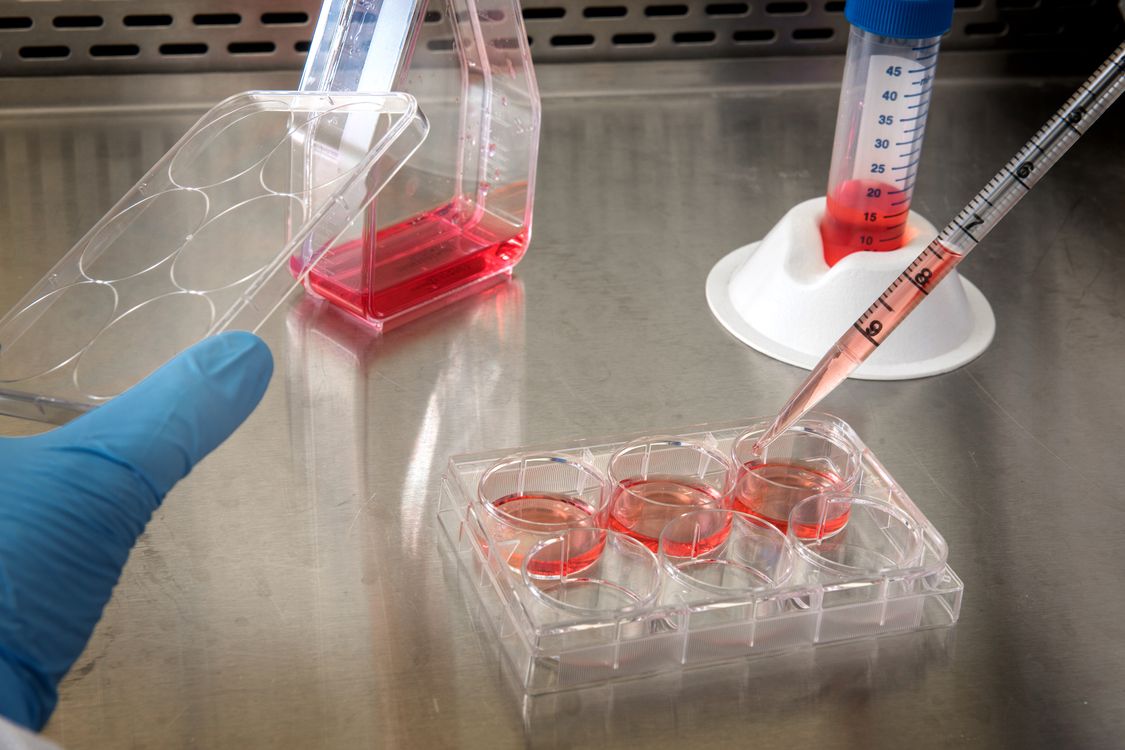
Cell culture is among the most demanding life science applications for water quality. Water used in culture media and buffers must meet the highest purity standards:
- Endotoxin Risk: Endotoxins (lipopolysaccharides) from Gram-negative bacterial cell walls, even at trace levels, can trigger cellular stress responses, affecting cell growth and experimental results. Ultrapure water systems must be equipped with effective sterilization components such as UVC sterilization modules to ensure endotoxin levels remain within acceptable limits.
- Ion Balance: Cell culture requires precisely controlled ionic environments. Trace heavy metal ions (lead, mercury, cadmium) or excess sodium and calcium ions can disrupt normal cellular physiological activities. STON ultrapure water systems control heavy metal content to <0.01 ppb, meeting the most stringent cell culture requirements.
- Sterility Assurance: Water used for cell culture must undergo effective sterilization. The UVC sterilization system in STON UltraPure series features lamp life exceeding 8,000 hours, efficiently eliminating microorganisms to provide consistently sterile ultrapure water for cell culture.
Ultrapure Water in Molecular Biology
PCR and qPCR:
Polymerase Chain Reaction (PCR) is extremely sensitive to inhibitors. Nucleases (DNase/RNase) in water can degrade template DNA or RNA, leading to amplification failure or false-negative results; metal ions can inhibit DNA polymerase activity; organic compounds can interfere with fluorescence signal detection. Therefore, PCR-grade water requires resistivity ≥18.2 MΩ·cm, TOC <5 ppb, and must be DNase/RNase-free.
Electrophoresis and Blotting:
In agarose gel electrophoresis and Western blotting, impurities in water can affect the ionic strength and pH of buffers, in turn affecting the migration rate and separation of nucleic acids and proteins. The stable water quality provided by STON ultrapure water systems ensures reproducibility and reliability of each experiment.
Proteomics and Genomics:
In MALDI-TOF-MS, proteomics sample preparation, and gene chip analysis, any trace contaminants can be highly amplified, interfering with detection results. Using ASTM Type I ultrapure water is a prerequisite for obtaining authentic, reproducible data.
Advantages of STON Ultrapure Water Systems in Life Sciences
STON Technologies' ultrapure water system series provides comprehensive solutions for life science laboratories:
- UpNanoX Smart Ultrapure Water System: Compact body design, only 30×20×40cm, saving valuable laboratory bench space. Equipped with Zero-Stagnation® system to prevent microbial growth in stagnant pipes, ensuring consistent water quality.
- Ultrapure120/UltrapureDualX: Dual-mode water dispensing (RO pure water and UP ultrapure water) meets multi-level water needs from general washing to precision cell culture.
- Smart Touch Operation: Equipped with high-precision online water quality monitoring system, displaying resistivity/conductivity and water temperature in real time, ensuring every water dispensing meets experimental requirements.
- Safe Design: Low-voltage DC power supply with water-electricity separation design ensures safe operation even in humid laboratory environments.
Conclusion
In life sciences research, water quality is the foundation of experimental success. Choosing a stable, reliable ultrapure water system can reduce variable interference at the source, improving data reproducibility and reliability. STON Technologies is committed to providing high-quality ultrapure water solutions for life science laboratories, helping researchers achieve more accurate and reliable experimental results.